

Why Electrical Compliance Requires Attention
A technically sound product is only one part of a reliable project. responsibilities, qualification, work procedures, their documentation and evidence must also function in the operating organization itself.
Management responsibility
Authority must be clear.Management responsibility
Technical responsibility is assigned through clear authority, suitable resources and defined escalation paths. Management can see who decides, who verifies and which evidence supports release and operation.
Project risk
Unclear interfaces create delay.Project risk
Responsibilities, qualification and work controls are examined before gaps become commissioning delays, audit findings or interruptions to operations.
Verifiable evidence
Decisions require reliable records.Verifiable evidence
Qualifications, instructions, approvals and controls remain traceable through records that can be reviewed by project management, auditors and responsible functions.
Operational continuity
Safe work must remain workable.Operational continuity
Electrical safety structures support stable operations, controlled interventions and consistent decisions throughout the project lifecycle.
Core Services
Five project functions connect requirements with decisions, implementation and evidence.
Electrical Compliance
Local requirements in the actual project context.Electrical Compliance
Applicable requirements are translated into responsibilities, procedures, qualification and evidence that work within the customer organization.
Electrical Safety Plans
A practical framework for safe electrical work.Electrical Safety Plans
Project plans are reviewed or developed so roles, interfaces, work controls and documentation support reliable execution.
Compliance Gap Analysis
Existing structures are compared with the required state.Compliance Gap Analysis
Existing policies, responsibilities and procedures are assessed against the actual project and operating context. Outcome: A prioritized picture of what is established, what is unclear and what needs implementation.
Electrical Safety Governance
Decision paths and technical authority become clear.Electrical Safety Governance
Authority, escalation paths and technical interfaces are defined so decisions remain consistent, traceable and operationally useful.
Electrical Qualification
Competence must match the assigned work.Electrical Qualification and Training
Qualification structures connect actual tasks, electrical risks and documented authorization so personnel can work safely and responsibly.
Electrical Responsibility
A qualified electrical professional assumes clearly defined responsibility (VEFK) within your organisation.External Electrical Responsibility
A suitably qualified professional can be formally appointed to manage defined electrical responsibilities. The role (VEFK / CRES) establishes authority, duties and reporting lines for safe electrical operations. Scope and interfaces are documented to provide reliable governance.
From Requirements to Operational Implementation
Compliance becomes valuable when the required state is understood, implemented and supported by evidence that remains usable after project handover.
01 Analyse
Responsibilities, qualification, procedures and evidence.Analyse the current state
Establish the current technical and organizational state before measures are defined.
02 Define
Priorities, owners and acceptance criteria.Define the required measures
Translate identified gaps into concrete actions with clear ownership and acceptance criteria.
03 Implement
Procedures that function in daily operations.Implement workable controls
Introduce responsibilities, processes and controls that remain usable during real project work.
04 Document
Records that support release and audits.Create reliable evidence
Create documentation that demonstrates decisions, responsibilities, qualification and implementation.
05 Verify
Confirm that implementation remains traceable.Verify the agreed structure
Confirm that agreed measures are understood, applied and supported by reliable evidence.
Applications
The same principles apply across different technologies, assets and operating models.
Industrial projects
Production, machinery and facilities.Industrial projects
Electrical compliance structures for machinery, facilities, commissioning and safe operations in industrial environments.
Electric vehicle systems
Development, production and service.Electric vehicle high voltage systems
Responsibilities and qualification for electric vehicle development, production, testing and service environments.
Battery technology
Safe structures across the lifecycle.Battery technology (BESS)
Practical electrical safety structures for Battery Energy Storage System (BESS); their testing, production, installation and industrial applications.
Power plants
Complex electrical installations.Power plants
Clear interfaces and evidence for projects involving complex electrical installations, generation assets and operational responsibility.
Energy infrastructure
Generation, storage and connected systems.Energy infrastructure
Compliance structures for energy generation, storage, grid interfaces and connected electrical infrastructure.
Data Centers
Continuous operations and controlled access.Data Centers
Electrical safety governance, qualification and evidence for critical facilities where operational continuity is essential.
International Projects: Local & Global Requirements
International organizations need local requirements to work within global engineering systems. The practical task is to retain the strengths of corporate standards while assigning the responsibilities, qualifications, procedures and evidence required for the project.
Experience across Germany, European and worldwide projects supports structures that remain understandable across sites, functions and organizational boundaries.
Your Project, Your Requirements
The relevant question is not how a generic model should look. It is what the project must achieve, who carries technical responsibility and which evidence must be available for release, audits and safe operation.
Technology Consulting Solutions GmbH provides the responsible technical contact for a clearly defined scope and documented project result.
Latest Insights
Technical perspectives on electrical compliance, safety governance and practical project implementation.

Who Is Authorised to Energise Electrical Systems During Commissioning in Germany?
Your commissioning programme has reached a decisive point. The installation [...]
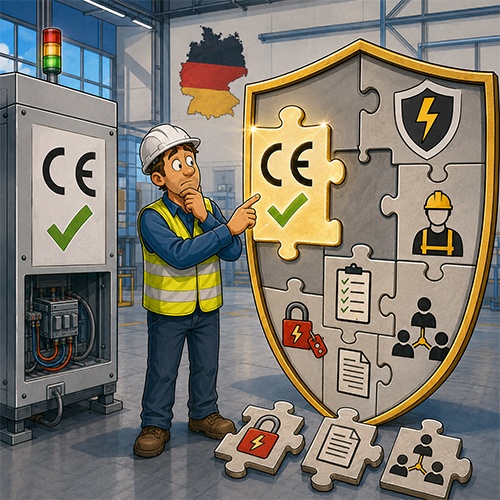
CE Marking Does Not Complete Electrical Compliance in Germany
Your company has supplied a production machine for a new [...]
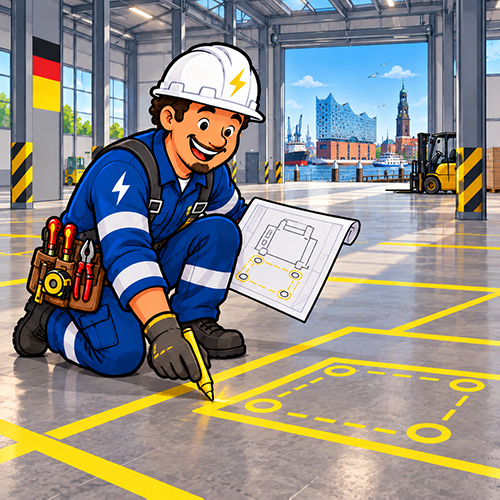
Before the First Machine Arrives: The Electrical Decisions That Determine Whether a New Factory Can Start Safely in Germany
The electrical decisions that make a new German factory testable, releasable and operable.

From Construction to Operation: Transferring Electrical Responsibility Safely
Your project is approaching completion. Major systems have passed tests, [...]
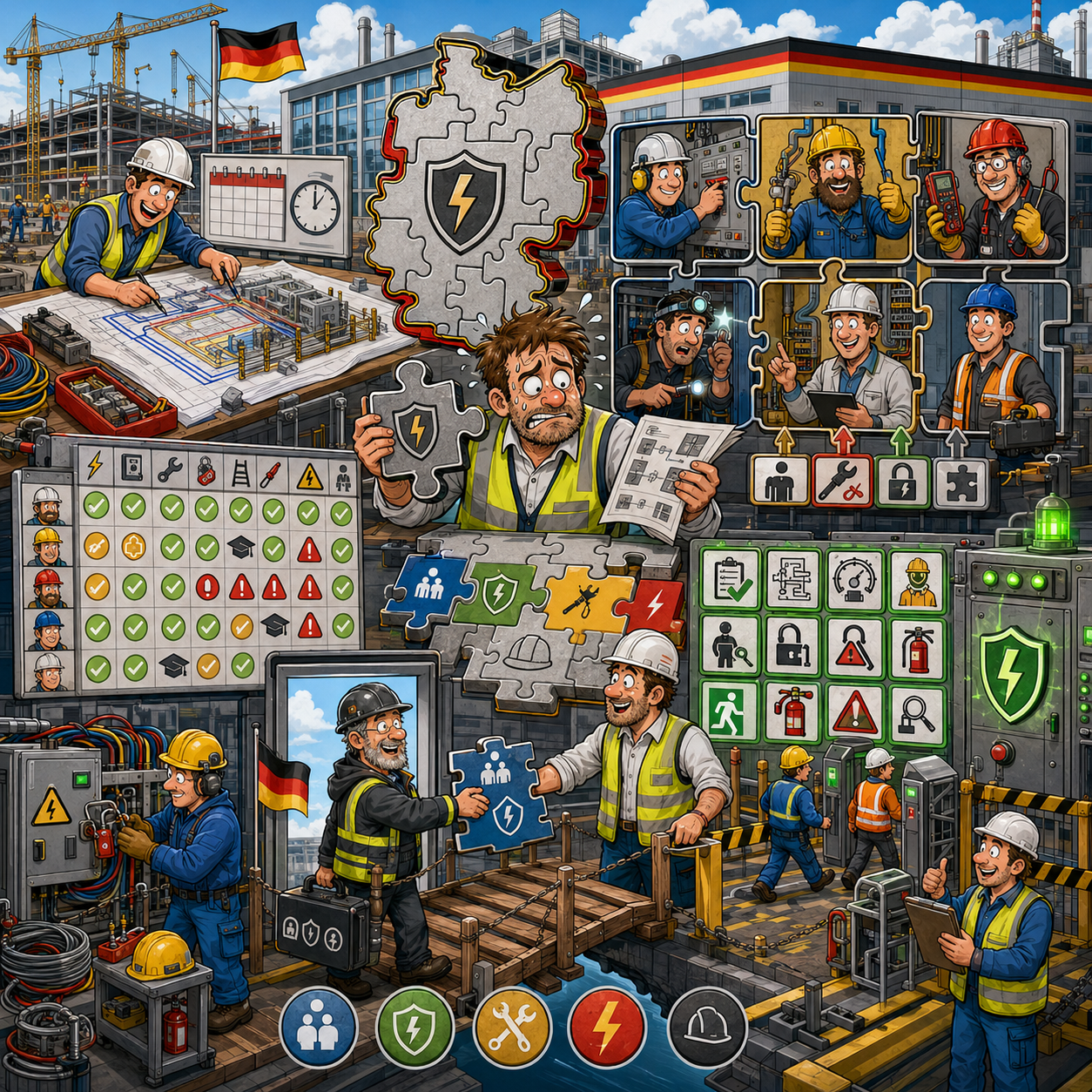
Opening a Factory in Germany: Building the Electrical Safety Organisation
Your company is investing in a new factory in Germany. [...]
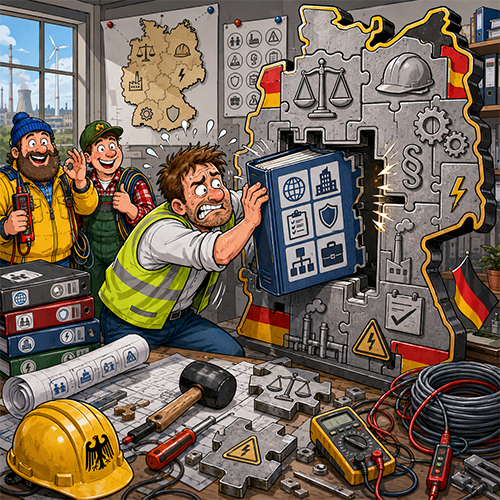
Can a Global Electrical Safety Standard Be Used for a Project in Germany?
Your organisation already has a global electrical safety standard. It [...]