Matthias Surovcik
How to control the moment when traction battery, vehicle and production equipment become one electrical work environment
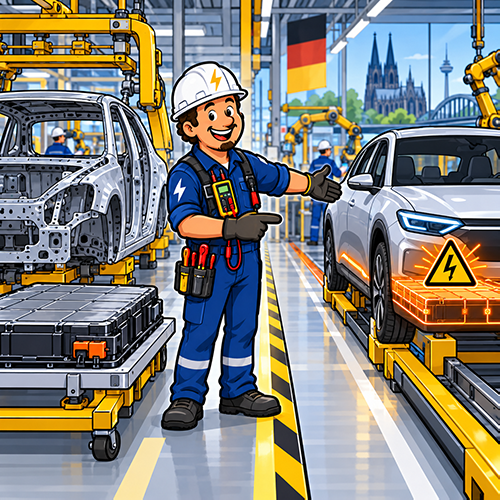
Your first battery electric vehicle is approaching a newly commissioned production line. The traction battery arrives charged, equipment settings are still being refined and several suppliers remain on site. Each package has an owner, but the difficult moment begins when battery, incomplete vehicle and line equipment interact.
High voltage risk does not start at one universal workstation. It changes with vehicle state and task. A battery can be enclosed at receipt, partly exposed during connection and remotely activated later. Production therefore needs a state model that engineers and operators can use, not a general label stating that the line handles electric vehicles.
Describe the vehicle state at every process step
The process map should start with the battery condition on arrival. Identification, transport state, visible damage, connector protection, state of charge where relevant and permitted handling are confirmed before the unit enters production. The map then follows installation, high voltage connection, bonding, coolant or thermal interfaces, first activation, software commissioning, charging and end of line testing.
For each step, the project records whether the high voltage system is disconnected, connected but not activated, energised with protection against direct contact, open for electrical work or in an uncertain state. A vehicle diagnostic message is not automatically a safe work verification.
DGUV Information 209 093 provides a task and qualification model for work on vehicles with high voltage systems in research, development and production. It distinguishes work before and after the high voltage system is activated and addresses production assembly, commissioning, electrical tests and rework. The required level follows the work and protective condition, not the employee's job title alone. Just to clarify; We are not going to explain all level in detail in this insight, that is an other topic.
Match competence to the task and protective concept
Repetitive assembly can be organised differently from electrical fault finding. A production task may be performed under a standardised procedure when technical measures provide the defined protection and a suitably qualified function has assessed the procedure. Work on a high voltage system in a non live state requires the competence to establish and verify that state. Work where protection against contact and arcing is not assured demands a higher level of capability and control.
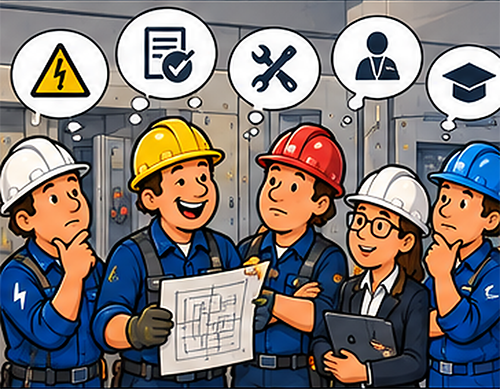
The qualification matrix should list the actual tasks, not only Level 1E, Level 2E or Level 3E. It should identify the vehicle platform, production phase, limits, required instruction, supervision and authorising function. A person trained for vehicle high voltage work is not automatically qualified to work on the stationary electrical supply, charging equipment, test installation or production machine.
Two shortcuts fail in practice. Broad high voltage training without task authority leaves limits unclear. Treating an industrial electrician as automatically competent for an unfamiliar vehicle system ignores product specific hazards and procedures.
Control first activation as an energisation gate
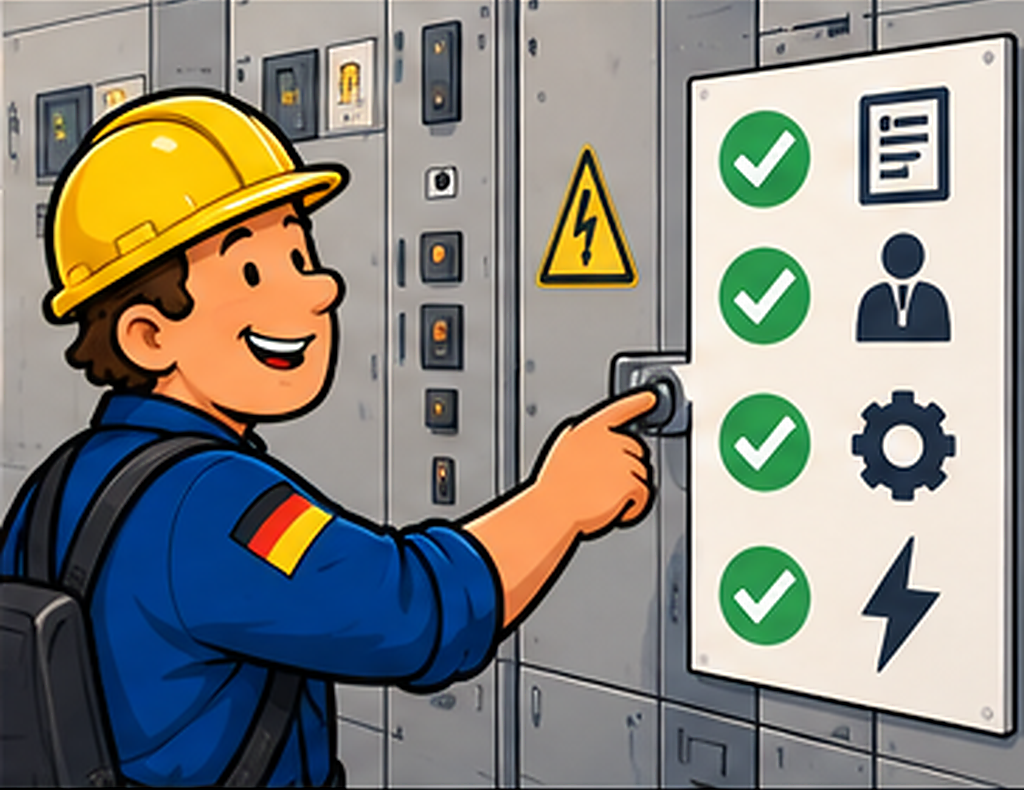
First activation changes the risk state and should have prerequisites. Battery identity and condition are accepted. Protective bonding and required insulation results are confirmed.
The procedure should define who authorises activation, who executes it, what indications confirm success and what requires an abort. It should also define the state after an interrupted sequence. Loss of diagnostic communication or an unexpected contactor status can leave the vehicle neither clearly inactive nor normally energised.
Stationary electrical installations remain subject to the appropriate electrical rules and DGUV Regulation 3. The interface review should establish which rule set supports each part instead of applying vehicle guidance to the entire line.
Prepare the abnormal route before the first fault
The first trial vehicles will not all follow the normal path. The line needs a controlled route for failed activation, insulation faults, damaged high voltage connectors, incomplete shutdown and uncertain battery condition. Safe parking, access control, diagnostic authority and escalation should exist before production pressure makes improvisation attractive.
The state record should travel with the vehicle. It identifies the last confirmed condition, open fault, restrictions and next authorised action. If the vehicle is moved, the receiving area must be able to understand the risk without relying on a verbal handover.
Routine work keeps a simple instruction, while abnormal vehicles leave the line before pressure turns uncertainty into exposure. Specialists remain available for the tasks that genuinely need them.
Conclusion
High voltage responsibility begins when the vehicle state and task create the hazard, not at a convenient departmental boundary. For fault handling, read “A Faulted BEV at the End of a German Production Line”. Validate every vehicle state before the first trial build and take care for the qualification and training of your staff, we are ready to do this for you (Click)
Frequently Asked Questions
At what point does a BEV become a high voltage vehicle during production?
There is no useful universal workstation number. The process map should define the state and protective measures at each step.
Can Level 1E personnel connect a traction battery in production?
No, that is not enough. DGUV Information 209 093 allows certain repetitive assembly and commissioning activities to be organised through standardised procedures and defined protection. The exact task, product condition and company procedure must be assessed by the responsible qualified function.
Is an industrial electrician automatically qualified for vehicle high voltage work?
No. Electrical education is valuable evidence, but vehicle system knowledge, the intended activity, practical capability and the qualification requirements for that work must be assessed. The reverse is also true for vehicle personnel working on stationary installations.
What evidence should precede first activation?
Typical evidence covers battery acceptance, completed connections, protective bonding, insulation status where required, covers and interlocks, approved software, area control, competent personnel and a defined abort route.
Does switching the ignition off make the high voltage system safe?
Not as a general rule. The system design and manufacturer procedure determine how the high voltage system is shut down, isolated and verified. Stored energy and unexpected component states must be considered.